
"So, do you think it'll sell for asking? Or maybe even less?"
That's what a client asked me last week about a house he’s seen on the market in Noe Valley. I understood the question. Mortgage rates are back above 7%, the national headlines keep talking about a cooling market, and it's natural to wonder whether the discounts are finally showing up in San Francisco, too.
My answer was a quick (and friendly) no. Not even close. [Add a detail or two here: the block, the list price, how many disclosure requests came in, the outcome if you know it.]
Here's the part that makes this a good story, though. The market has softened a little in some corners of the city, and I don't want to pretend otherwise. Take Miraloma Park. Back in the spring, single-family homes were flying off the shelves everywhere in San Francisco, and Miraloma had its share of the fun, with prices to match. Today, homes there are selling at a slightly slower rate (around 15 days) compared with about 7 days in the spring. Longer, yes. But I'd call going from one week to two weeks a slight breather, not a buyer's market.
And that's the lesson I keep coming back to: San Francisco isn't one housing market. It's dozens of them, block by block. Desirable neighborhoods like Noe Valley tend to command a premium no matter what the broader market is doing, because the demand for them doesn't switch off when rates tick up.
But that doesn't mean there are no deals out there, even in a hot market. There often are, in nearby neighborhoods, if you're willing to make a trade-off or two and have just enough guts to write the offer. Sometimes you turn out to be the only offer, and sometimes the seller says yes. Let's look at the numbers first, then I'll show you what I mean.
The National Picture: A Fall Cooldown
Let's start with what you're hearing on the news, because it's not wrong. Nationally, the spring rally has given way to a fall cooldown.
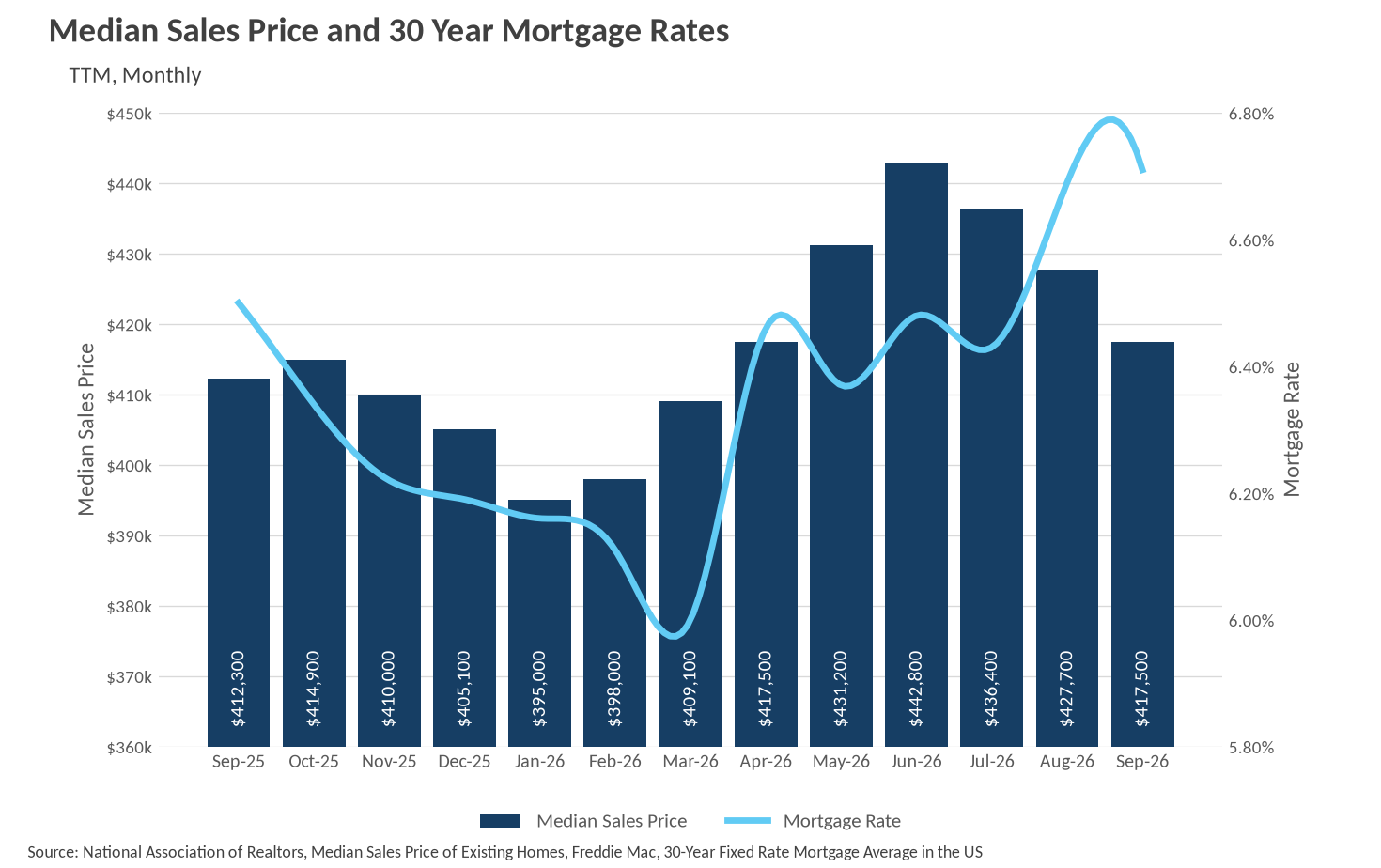
The median existing-home price slipped to $417,500 in September, the third straight monthly decline and about 5.7% below June's peak of $442,800. It's still slightly higher than a year ago (up about 1.3%), so this looks more like a seasonal softening than a collapse.
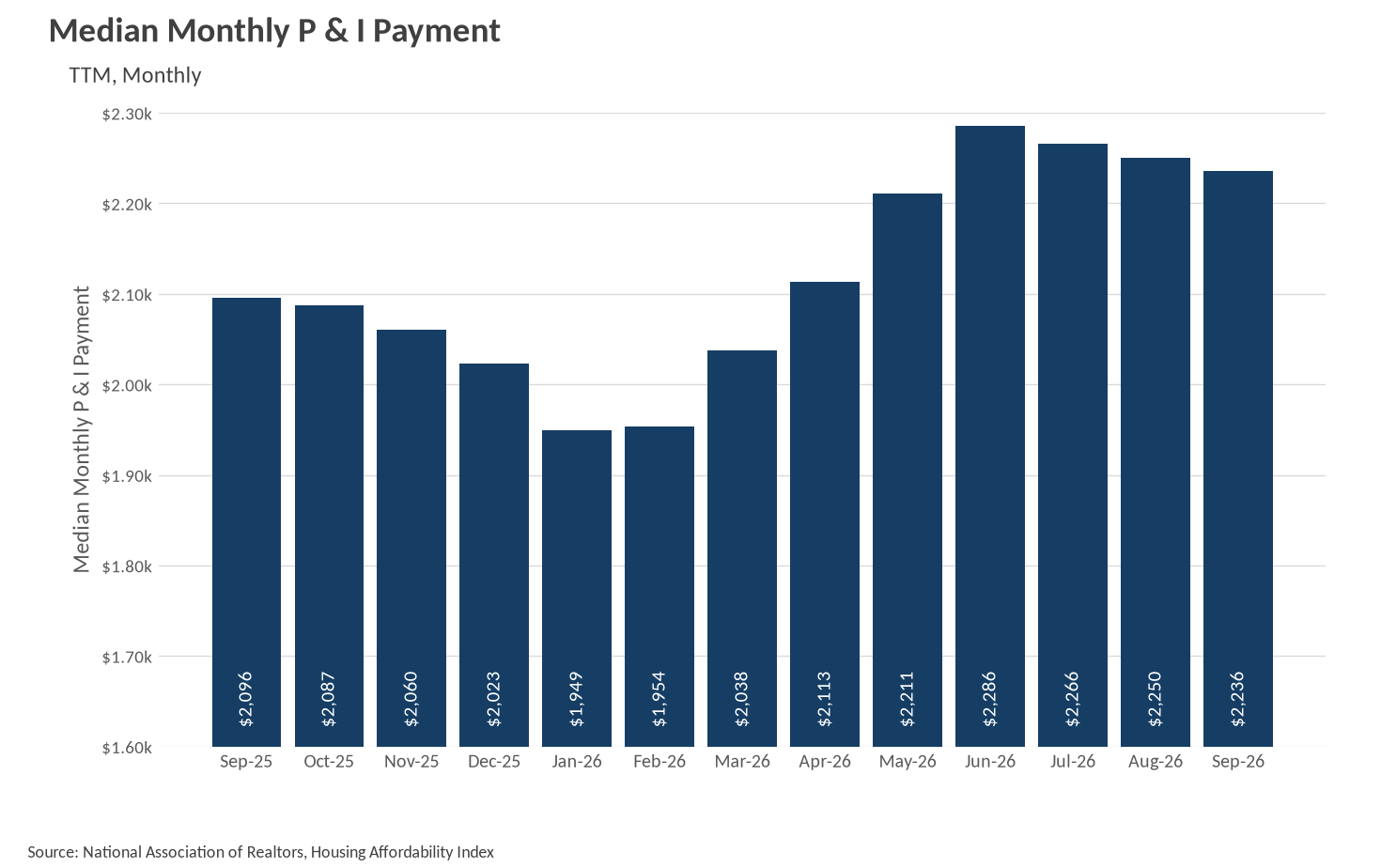
The bigger story is affordability. Mortgage rates bottomed at 6.00% in March, climbed to 6.71% in September, and have since jumped to about 7.28% in October. Even with prices easing, the median monthly principal-and-interest payment is $2,236, up roughly 6.7% from a year ago. Lower prices haven't meant lower payments. Nationally, home prices have eased since June while mortgage rates have climbed, which is why monthly payments are still running higher than a year ago.
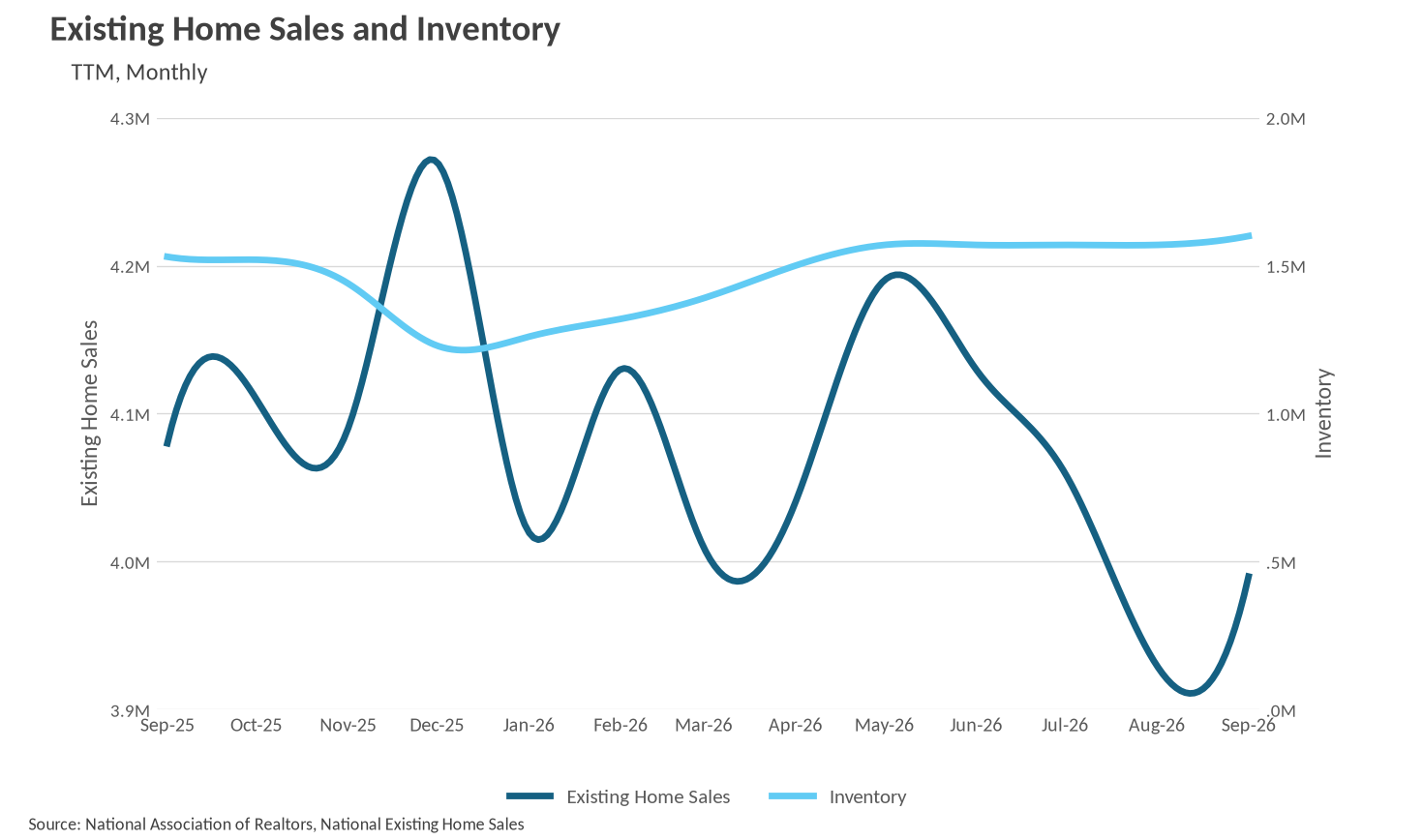
Inventory is moving, too. Nationally, the number of homes for sale climbed to 1.6 million in September, the highest level in over a year, after sitting flat for four months. Here's what I find interesting: new listings were actually down slightly from last September. So the extra supply isn't coming from a flood of new sellers. It's coming from homes sitting longer and not selling at today's prices. Meanwhile, existing-home sales ticked up about 1.5% from August but remain roughly 2% below last year's pace.
Put it all together and the national market is carrying roughly 4.8 months of supply. In real estate, we generally consider about three months of supply a balanced market, so the country as a whole now leans toward buyers. The catch is that having leverage and being able to use it are two different things. With rates where they are, plenty of would-be buyers simply can't act on the discounts available.
San Francisco Plays by Different Rules
Now, zoom in on our little 49 square miles, and the story flips.
After a soft August, the median single-family price bounced back to $2,054,000 in September, up 11% from August and about 18.4% higher than a year ago. Condos landed at a median of $1,316,500, up nearly 19% from last September.
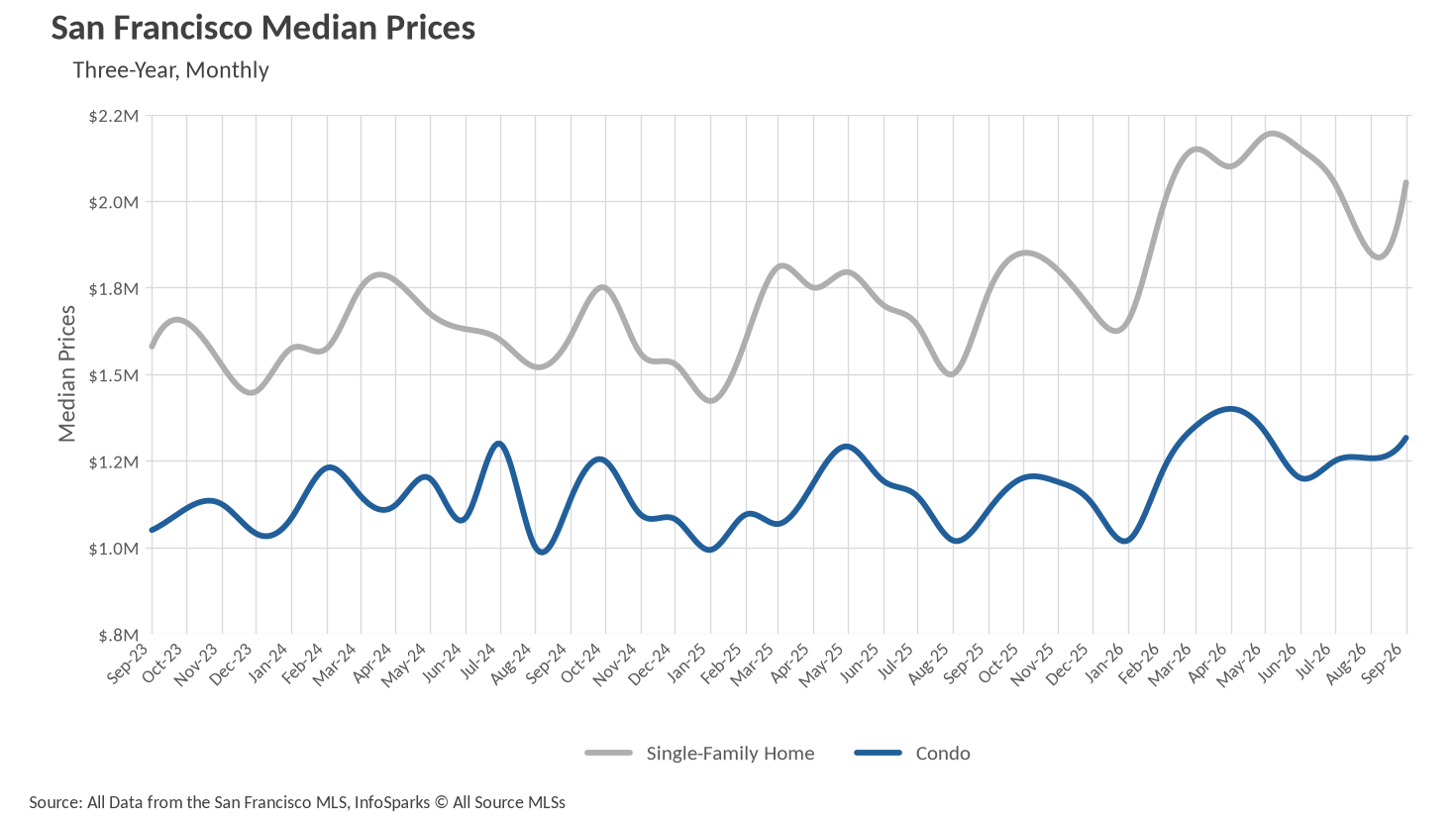
San Francisco's median single-family price has held above $2 million for most of 2026, a level that wasn't part of the conversation at this time last year.
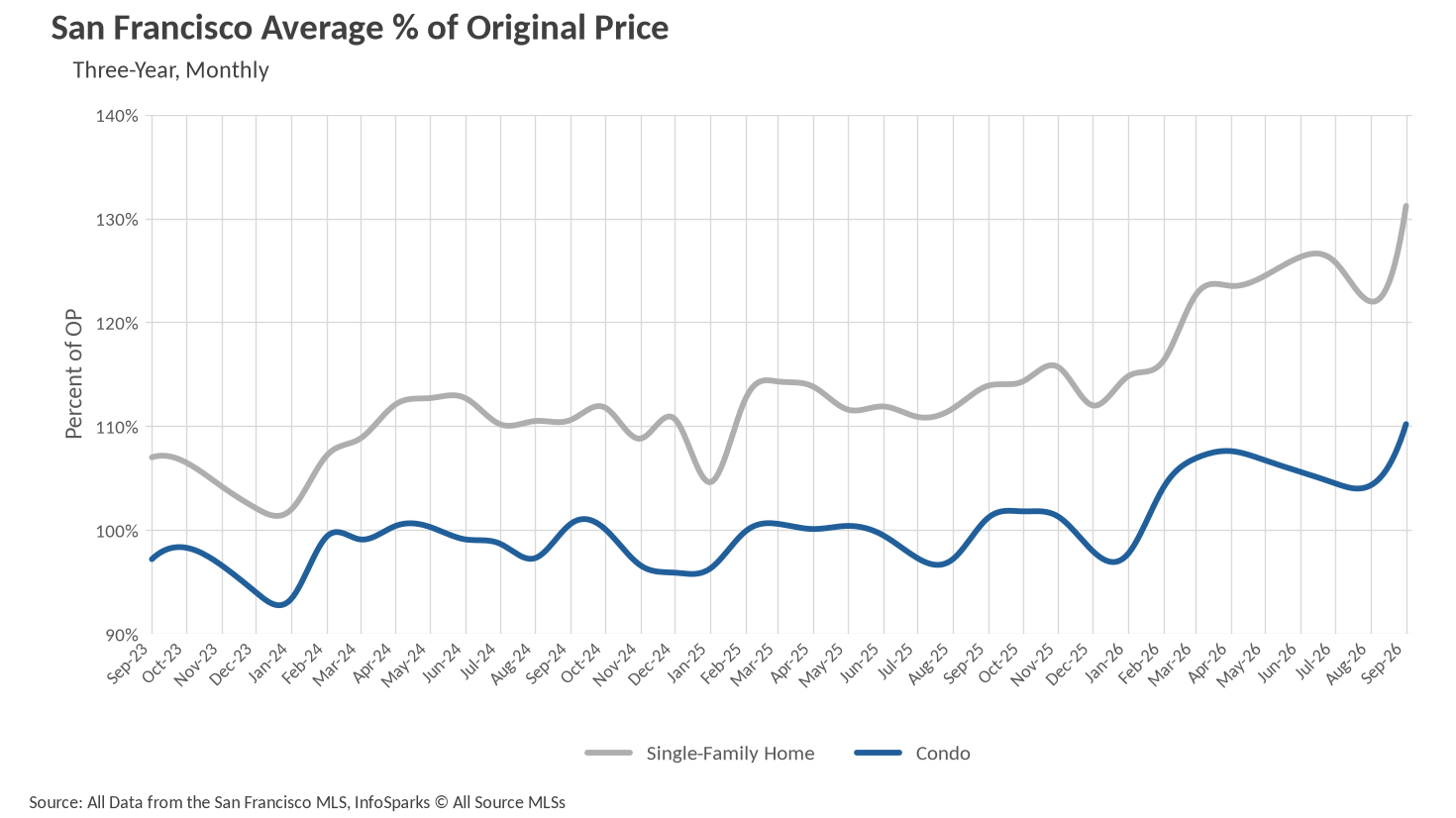
The number I'd keep my eye on, though, is what buyers are paying relative to the asking price. In September, single-family homes sold for an average of 31% above original list price, the highest reading in the three-year data set and more than double the 14% from a year ago. Condos sold for an average of 10% over, up from just 1% last September. That fits what I shared in my September post: list price is a marketing strategy, and the final price is where the market actually lands.
Supply tells the other half of the story. Fall listings did arrive, and I'm glad to see them:
Single-family: 229 homes were for sale at the end of September, up about 40% from August but still roughly 25% below last September.
Condos: 428 were for sale, up about 15% from August but nearly 34% below a year ago.
New listings: 309 single-family homes came to market in September, compared with 187 in August and 342 a year ago.
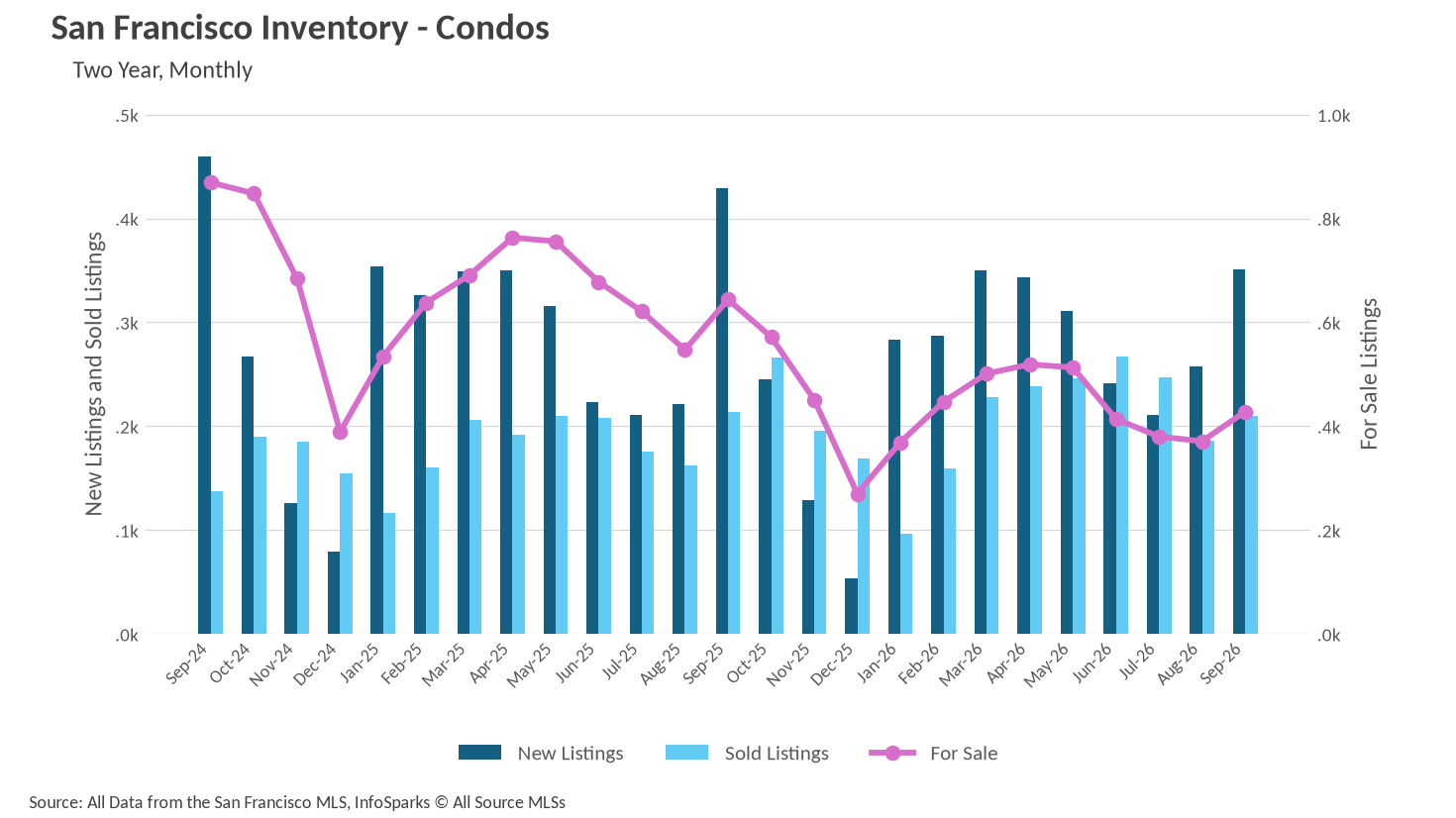
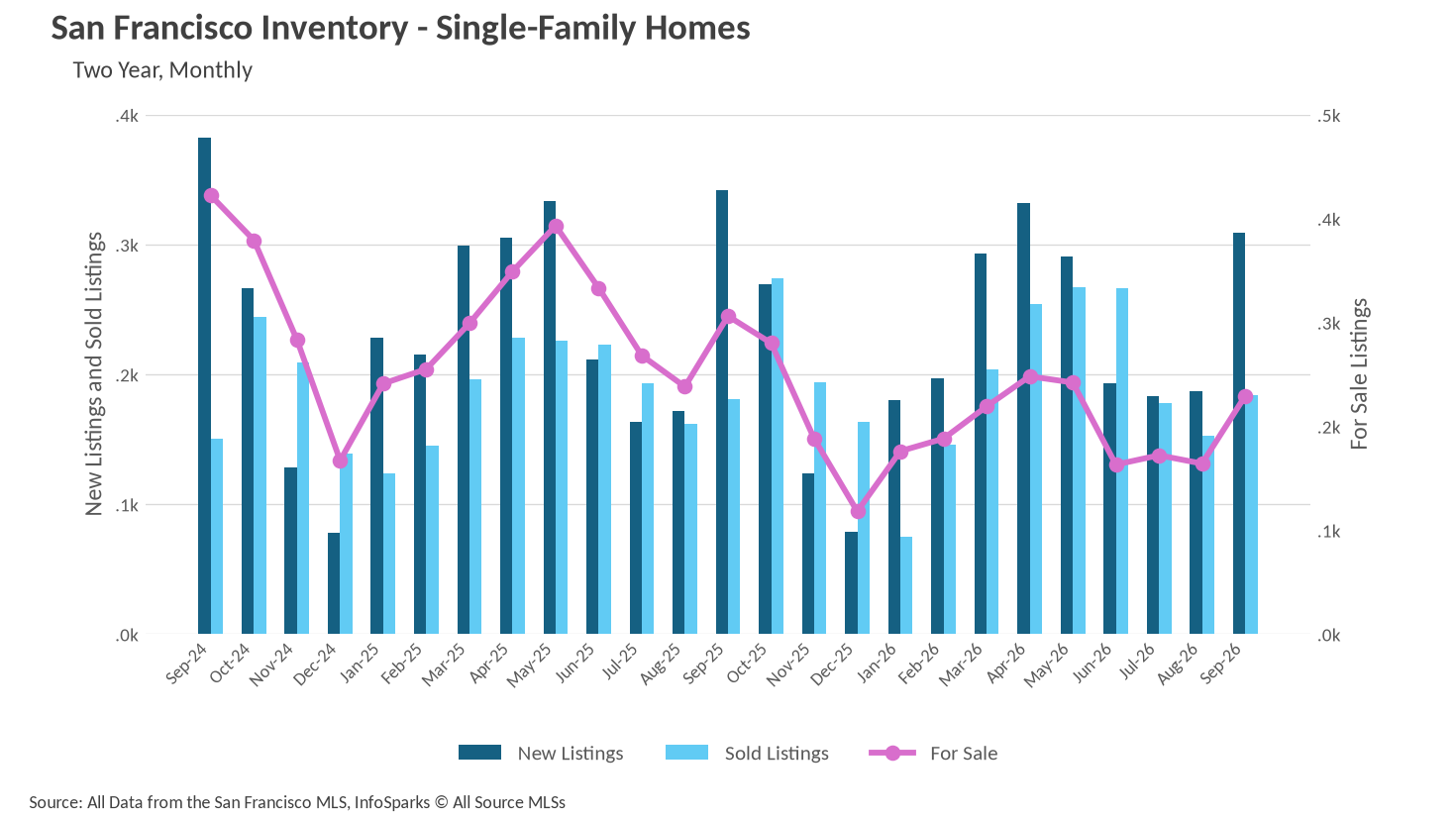
Demand, meanwhile, hasn't budged. Single-family sales held essentially flat year over year (184 versus 181), and condos did the same (210 versus 214). Fewer homes for sale plus the same number of buyers is a recipe for competition.
And it shows up in the speed of the market. The average single-family home sold in just 12 days. Condos, which used to give buyers room to deliberate, now sell in about 14 days, down from 26 days last September.
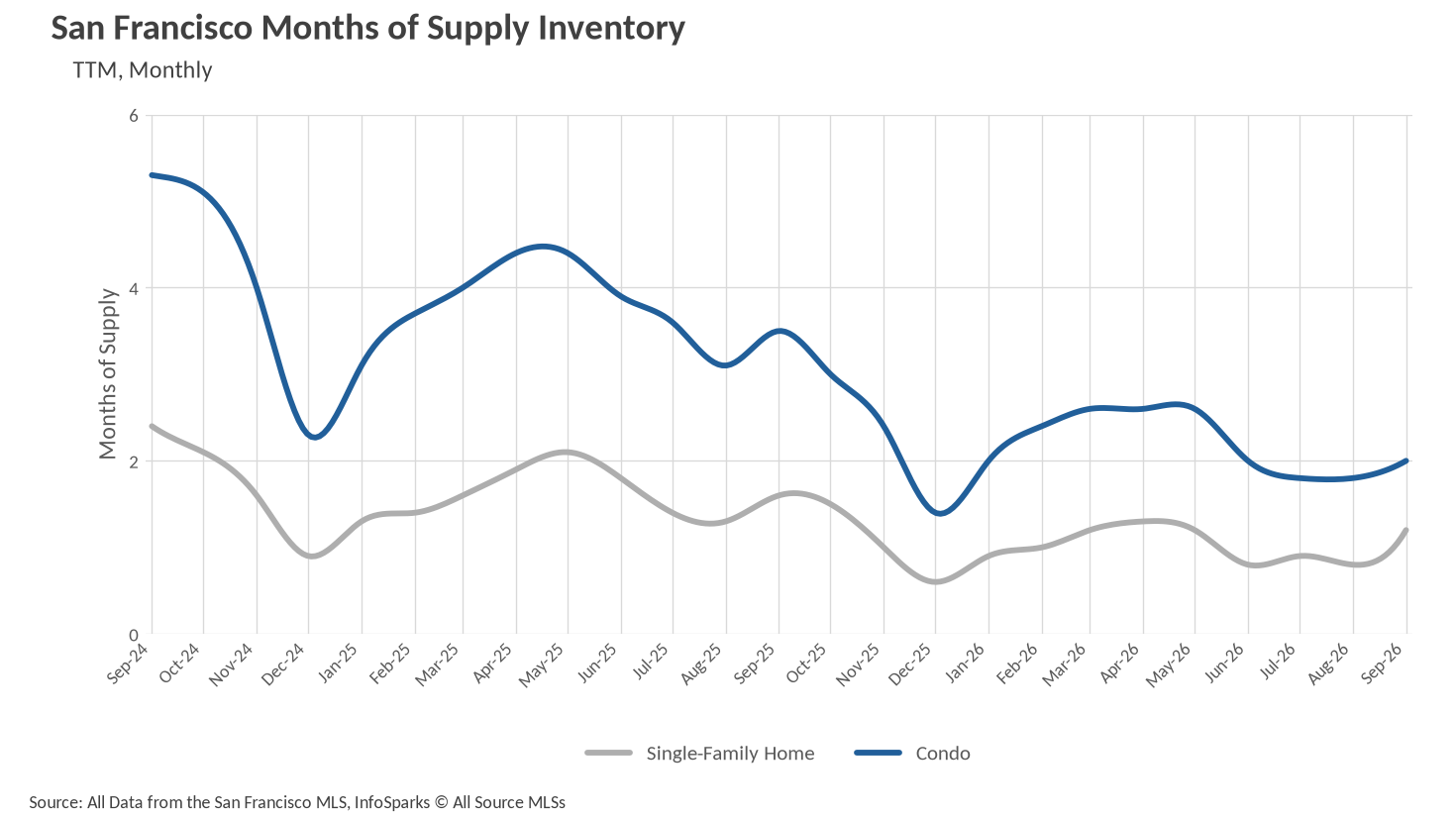
Finally, remember that rule of thumb: about three months of supply is balanced. San Francisco sits at roughly 1.2 months for single-family homes and 2.0 months for condos. Both are firmly seller's-market territory, and the condo number is down from 3.5 months a year ago.
Neighborhood Is the Whole Game
Here's what I tell clients, whether they grew up here or moved last month: citywide statistics are a weather report for the whole Bay Area. Your block has its own forecast.
A slower stretch in a neighborhood like Miraloma Park, where homes are taking about 15 days instead of 7, doesn't mean prices are collapsing. It means the frenzy of spring has settled into something a little more normal. Meanwhile, a perennial favorite like Noe Valley keeps its premium whether rates are 6% or 7%, because there will always be more buyers who want to live there than there are homes to buy. That's true of other sought-after neighborhoods across the city, too.
As I mentioned in my September post, the highest sale-to-list ratios weren't always in our priciest neighborhoods. The percentage over asking says as much about pricing strategy as it does about demand.
So where does that leave a buyer who loves a neighborhood but can't stomach the premium? Look one neighborhood over. Prices and competition can change a lot within a few blocks, and the trade-offs are often smaller than you'd expect:
A little less polish: a dated kitchen or bath, or a home that needs some TLC. After years around construction, I can often help you tell what's merely cosmetic from what's structural and costly.
A busier street, a smaller yard, or a layout that's less than perfect.
A slightly longer trip to your favorite coffee shop.
Then comes the part that takes a little courage: write the offer. Homes that aren't the obvious darlings sometimes attract fewer buyers than you'd think. You might be the only offer, and a seller who has been on the market a couple of weeks may be happy to say yes. I can't promise it will happen on any particular home, and every property is different, but I've seen it enough to say that the buyers who never write the offer never find out.
What This Means for You
For buyers: Don't let the national headlines or the 7% rate environment convince you that every San Francisco home is on sale. In the neighborhoods everyone wants, expect competition and plan to look past the list price to where a home is likely to trade. If you're flexible, widen your search to the neighborhoods next door, decide which trade-offs you can live with, and be ready to move quickly. Rates are bouncing around, and I'm not a lender or a financial advisor, so please talk with your mortgage professional about your numbers before you start writing offers.
For sellers: Conditions still favor you, with low inventory, quick sales, and strong premiums. But nationally, buyers are more price-sensitive than they were in June, so price for today's market and not last spring's peak. As I wrote last month, the right list price isn't just picking a number, it's picking a strategy, and the right strategy depends on your property and your neighborhood.
If you're thinking about taxes or legal questions around a sale or purchase, such as capital gains, transfer taxes, or contract terms, I'm not a tax or legal professional, so please check with a CPA or real estate attorney. Nothing here is a guarantee of how any particular home will sell.
The bottom line: The national market is cooling and San Francisco is still running hot, but the most useful number is the one for your neighborhood, and sometimes even your block. Understanding the local story behind the headlines is what turns a stressful decision into a confident one.